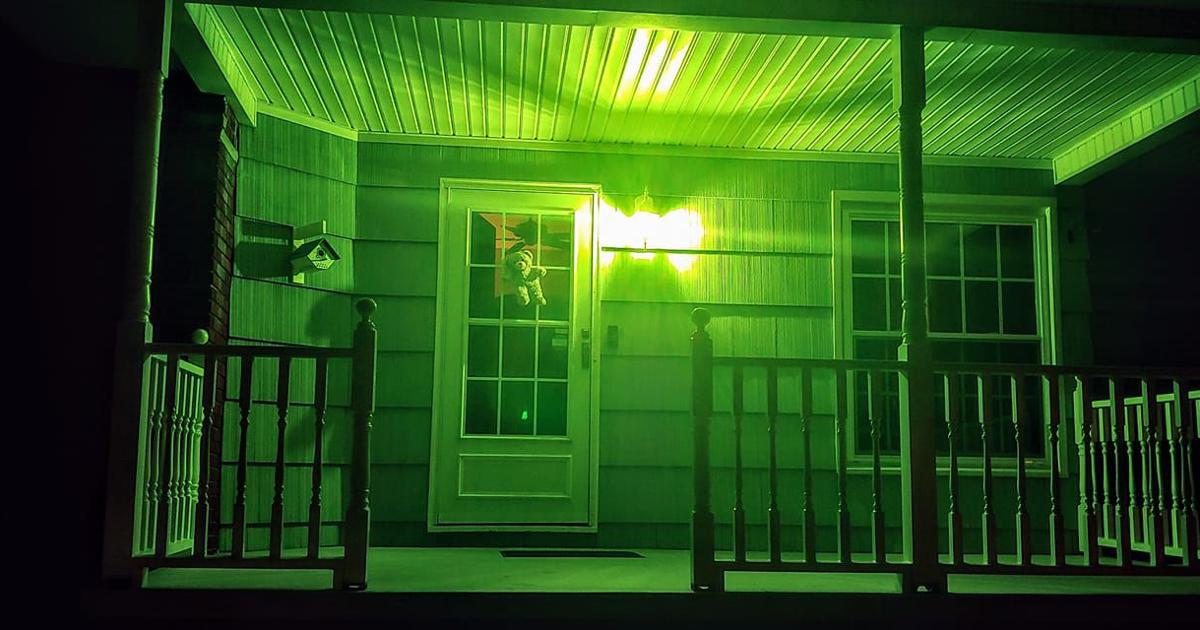
The Surprising Message of Blue Porch Lights


As winter settles in and the air turns crisp, neighborhoods slowly transform into scenes of quiet beauty. The streets fill with glowing decorations—soft white lights that shimmer like frost, ribbons of red and green that wind around doors and fences, and the scent of pine drifting from freshly cut wreaths. It’s the season of warmth and gathering, a time when people illuminate the cold nights with light and color. Yet, in the midst of all the familiar reds, whites, and greens, another color often stands out—a deep, tranquil blue. A blue porch light doesn’t shout for attention the way flashing holiday bulbs do. It glows softly, calm and deliberate, carrying a quiet kind of meaning. For some, it’s just a color choice, part of their home’s winter décor. But for others, that blue light speaks in a language that goes beyond style, holding emotion, gratitude, and remembrance.
In recent years, these blue porch lights have appeared more often, scattered across towns and cities like small beacons of intention. Sometimes you notice them glowing at the end of a street, or reflected faintly in a layer of frost on a car windshield. Their presence seems to grow stronger each winter, as if more people are drawn to the idea of light as both symbol and comfort. The holidays, after all, are full of meaning—each candle, each ornament, each gesture tied to memories and traditions. Amid that shared glow, the blue light stands apart. It feels both modern and timeless, familiar yet mysterious. And maybe that’s part of its appeal: it gives people a way to say something quietly, without words, in a season that can be loud with celebration.
For many, a blue porch light is a sign of respect. It’s a simple but visible way to thank the people who work while others rest—the police officers who patrol snowy roads, the firefighters who respond no matter the weather, the paramedics who bring comfort and help in moments of crisis. The glow of blue against a front porch or a window can feel like a nod of appreciation, a small light left on for those who protect others. It tells them they are seen, that their work matters, and that someone, somewhere, is grateful. In this sense, blue becomes more than a color. It becomes a bridge between those who serve and those who benefit from their service.
But blue lights don’t only honor those in uniform. The same hue has become a powerful emblem for autism awareness—a symbol of understanding and acceptance. When people light their porches blue for this cause, it’s a way of saying, “We see you. You belong.” It’s a gesture that extends compassion into the public space, turning an ordinary home into a message of inclusion. In some places, entire neighborhoods have joined together, lighting their porches blue in unison, transforming dark streets into pathways of empathy and awareness. It’s a simple, gentle statement—but one that carries enormous weight.
In other homes, the meaning is even more personal. A single blue bulb burning softly through the night can carry the memory of someone who isn’t there anymore. It might honor a loved one lost too soon, or a friend missed especially during the holidays. For those who have experienced loss, the season’s cheer can sometimes feel bittersweet, full of reminders of what’s missing. A blue light becomes a quiet act of remembrance—a small ritual that says, “You’re still part of this home, even if you’re gone.” Some families light blue to symbolize peace after hardship, or hope in the midst of uncertainty. Others use it to bring a sense of calm to a hectic time of year. In a world that often feels noisy and fast, that steady blue glow offers a pause, a breath, a moment of stillness.
Sometimes, the choice is purely aesthetic. Blue light has a particular beauty in winter—it reflects off snow in a way that feels serene and almost magical. It makes the edges of frost sparkle and gives doorways a cool, dreamlike hue. Homeowners who love design might choose blue for its elegance or its contrast with the traditional red and green of the holidays. It can feel modern and sophisticated, adding depth to the typical festive palette. And yet, even when chosen for beauty alone, blue light rarely escapes meaning. People who pass by often wonder about it. They pause, they think, they feel something—perhaps curiosity, perhaps comfort. That’s the power of symbols: even when they start as decoration, they end up carrying stories.
In some towns, community programs have encouraged residents to light blue in solidarity or remembrance. After a tragedy, or to raise awareness for a cause, people turn on blue bulbs as a collective act of empathy. One house starts, then another, until the whole street glows with unity. Each light is personal, but together they create a shared statement. It’s a quiet way to bring people together—without speeches, without gatherings—just through light. And maybe that’s what makes the idea so enduring: it’s simple, but it connects people in ways that words sometimes can’t.
The color blue itself carries layers of emotion. It’s often linked to calm, trust, and reflection. It reminds us of open skies and deep waters—vast, steady, and enduring. In winter, when nights are long and the world slows down, blue feels like the right companion. It soothes instead of sparkles, invites peace instead of excitement. There’s something about its cool tone that encourages introspection, the kind of quiet thought that fits naturally with the season. During the holidays, when the world fills with noise and movement, that quietness can be healing.
For families who have someone serving in the military, a blue light can be both tribute and comfort. It’s a way of keeping connection across distance, of marking a place for someone far from home. When service members see blue lights shining from porches back in their neighborhoods, they know they’re remembered. They know that while they’re away—sometimes in dangerous or lonely places—people are thinking of them. It’s a small light that carries a big message: you’re not forgotten.
The rise of blue porch lights also speaks to something broader happening in communities today. People are looking for ways to express themselves, to make their values visible without needing grand gestures. Light, being universal, offers that chance. It’s accessible to everyone—anyone can change a bulb. Yet that simple action can mean so much. It can be a show of gratitude, a call for awareness, a memorial, or simply an offering of peace. Each person who chooses blue adds their own layer of meaning, creating a tapestry of stories behind the glow.
And then there’s the mystery. Blue light has an almost otherworldly quality, especially when seen through a swirl of snow or from a distance on a dark night. It feels quiet but powerful, like a secret being shared. You might drive past a house with a blue porch and wonder what story lies behind it. Is it for a cause, for a memory, for love? The not knowing is part of the magic. The light invites curiosity but doesn’t demand answers. It’s enough that it’s there, shining faithfully through the cold.
For some, turning on that light becomes a ritual, part of their yearly rhythm. They might screw in the blue bulb right after Thanksgiving, or on the first night of December, or when they feel the holiday spirit stirring. For others, it stays on all year, a constant reminder of something or someone meaningful. Over time, the act becomes a habit—a small but powerful way of keeping connection and intention alive. And even when the decorations come down, some people leave the blue bulb burning. It becomes part of the home’s identity, part of its silent story.
There’s also something comforting about the way blue lights blend with the winter night. Unlike bright reds or flashing whites, blue merges softly with the darkness, illuminating without overwhelming it. It feels protective, like a soft shield against the cold. For many, that’s what they want the holidays to be—a moment of warmth and safety in a world that can feel uncertain. The blue light seems to whisper that message into the night: here is a place of peace.
Children sometimes ask about the blue lights they see while riding in the car with their parents. “Why is that house blue?” they might ask. And the answers vary. Some parents say it’s for the police, some say it’s for people who help others, some say it’s for someone who is missed. Those conversations, sparked by a single light, can plant seeds of awareness and empathy. A small glow can start a bigger understanding of kindness, respect, and remembrance. It’s one of those gentle ways that traditions grow—passed quietly from one generation to the next.
As winter deepens, the blue lights remain steady against the long nights. Snow gathers on railings and rooftops, muffling sound and softening the edges of the world. The holidays come and go, with their laughter and gatherings and gifts, but the blue light keeps shining—a steady reminder that meaning doesn’t fade when the season ends. For some, it’s the first thing they see when they come home from work, a signal of calm waiting by the door. For others, it’s a comfort during lonely moments, a small proof that beauty can exist even in silence.
Over time, a single blue light can become part of a neighborhood’s story. Neighbors might notice it each year and remember what it stands for. Maybe it becomes a symbol of unity during tough times, or a reminder of someone who once lived nearby. Light has a way of weaving memory into place—it lingers in people’s minds long after it’s gone. And when new residents move in, they might continue the tradition without even knowing its origin, simply drawn to the beauty and calm of that color.
The simplicity of it all is what makes it so powerful. A bulb costs almost nothing, takes only seconds to change, yet it can represent so much—gratitude, remembrance, hope, peace. In an age where so much feels complicated, a blue porch light is refreshingly clear. It doesn’t require explanation or permission. It just shines. And in doing so, it joins countless other lights across towns and cities, each carrying its own quiet story.
There’s something almost poetic about the way these lights transform the landscape. Drive through a snowy neighborhood at night and you’ll see the usual reds and greens twinkling on rooftops, the soft yellow glow of windows, and then—every so often—a gentle blue porch standing apart. It draws your eyes, slows your thoughts, makes you wonder. It’s as if that light has its own rhythm, its own calm heartbeat amid the chaos of the season. It reminds you that celebration doesn’t always have to be loud. Sometimes, the truest expressions of meaning are the quiet ones.
And maybe that’s why blue porch lights have continued to spread. In a world where so many things compete for attention, a small, steady light feels grounding. It reminds people of what’s essential—care, connection, remembrance. It doesn’t ask for anything, doesn’t boast, doesn’t blink. It just stays there, night after night, through cold winds and snow, a sign of presence and intention. Whether it’s honoring someone, supporting a cause, or simply offering peace, that single light has the power to touch hearts without ever saying a word.
When winter finally begins to fade and the days grow longer, many of those blue bulbs still glow faintly at dusk. They’ve become part of the home’s rhythm, part of the landscape of quiet acts that make up a community. As the world moves on to spring and summer, some people take them down, replacing them with warm white lights or none at all. But others keep them burning, even through the bright months, because their meaning isn’t tied to any one season. The message of care and remembrance doesn’t expire with the cold.
In the end, a blue porch light is a small thing—but it carries the heart of the season. It’s about gratitude for those who serve, awareness for those who struggle, remembrance for those who are missed, and peace for those who seek it. It shows that even in a world full of grand gestures and endless noise, a single light can still make a difference. It can comfort a stranger, inspire a neighbor, start a conversation, or simply remind someone that goodness exists quietly, waiting in the dark.
And as the snow falls and the nights stretch long, those blue lights will keep shining—steady, calm, and full of meaning—lighting the way home for anyone who happens to pass by.