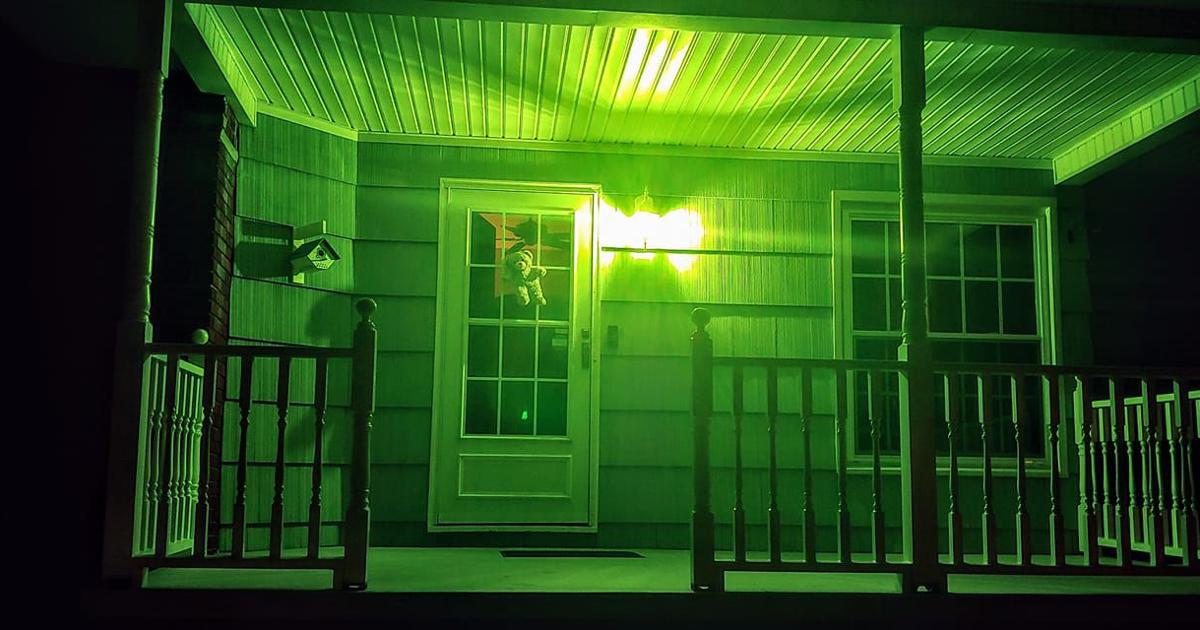
My parents sold their paid-off house to rescue my sister, then showed up at my lake house with a moving truck. “We’re your parents. We don’t need permission to live here,” Dad demanded. But when I found a note slid under my front door, I realized this was much worse than a family emergency.


There is a kind of silence you don’t stumble into. You build it, piece by piece, out of exhaustion, out of restraint, out of saying yes too many times before you finally learn how to say no. It’s the kind of quiet that settles only after years of being pulled in directions you never chose, after drawing lines no one respects until you force them to.
My name is Carter. I’m thirty-six years old, and I work as a remote architectural consultant. I designed my house myself—every beam, every angle, every window positioned to catch the long gray light off Lake Superior. It sits on three wooded acres, tucked just far enough from the road that headlights don’t reach it unless someone is already too close.
It isn’t a mansion. No marble staircases, no sprawling wings. But it’s mine. Paid for with years of eighty-hour weeks, with deadlines that bled into weekends, with the quiet discipline of saving when other people spent. Every iron fixture, every pane of glass, every inch of it exists because I chose it, worked for it, and protected it.
More than anything, it’s a boundary.
For most people, a house is shelter. For me, it’s distance.
My family has always been… loud. Not just in volume, but in presence. Needs, demands, expectations that came without warning and never really left. For most of my life, I was the one who adjusted. The one who fixed things. The one who made room.
Two years ago, I stopped.
I didn’t cut them off completely. I sent birthday gifts. I answered the occasional holiday call. I kept things polite, controlled, distant. I shared nothing about my finances, nothing about my work beyond vague summaries, nothing about my life that could be turned into leverage.
That distance brought something I hadn’t felt before.
Peace.
And for two years, that peace held.
Until a freezing Tuesday evening in late November, when everything I had built—every boundary, every quiet moment—cracked all at once.
I was in my loft office, headphones on, halfway through reviewing a set of structural drawings, when light swept across the windows. Not the soft, passing glow of a car on the road. This was direct, deliberate. Headlights climbing the trees, flooding the glass.
I frowned, pulled off my headphones, and stood.
When I looked down into the driveway, my stomach dropped.
A twenty-six-foot U-Haul truck sat idling in front of my house. Behind it, unmistakable even in the dim light, was my father’s beige Buick.
My phone lay face down on the desk. When I picked it up, the screen lit with missed notifications. Fifteen calls. More texts than I could read at a glance.
They were almost here.
They hoped my driveway was clear.
Pick up.
We’re here.
A slow, sinking feeling settled in my chest. No one rents a truck that size for a visit.
I went downstairs, flipped on the floodlights, and opened the front door. I didn’t step out. I stayed planted in the doorway, one hand on the frame, as if the house itself needed anchoring.
“Dad. Mom.”
My voice sounded calmer than I felt.
“What is going on?”
Arthur climbed the porch steps first. He was already soaked from the rain, his jacket clinging to him, irritation written across his face like he’d been inconvenienced rather than the one doing the inconveniencing.
“Carter, finally,” he said. “Get a coat. We need to unload before the mattresses get wet.”
For a second, I thought I’d misheard him.
“Unload?” I repeated. “What mattresses? Why are you here?”
He looked at me the way he used to when I was a kid asking something obvious, something beneath him.
“We’re moving in,” he said, like it should have been clear from the moment I saw the truck. “Now move. It’s freezing.”
My mother hurried up behind him, clutching her purse, her hair damp and flattened from the rain. She looked smaller than I remembered, more fragile, but her eyes carried that same quiet insistence.
“Please don’t start, Carter,” she said. “We’ve had the worst day. Can we just come inside?”
The words landed wrong. Not a request. An assumption wrapped in politeness.
“You can’t just show up like this,” I said. “You have a house in Ohio.”
Arthur let out a slow, theatrical sigh.
“We sold it,” he said. “Closed this afternoon.”
The world seemed to tilt slightly.
“You sold your house?”
“Yes.”
“Why?”
Martha’s composure cracked instantly. Tears filled her eyes, her voice trembling as she spoke.
“To save Chloe,” she said. “She was in trouble. The bank was going to take everything. We couldn’t let that happen to her.”
Of course.
Chloe.
My younger sister. The one who had never been allowed to hit the ground, because my parents were always there to catch her before she learned what falling meant.
I felt something cold settle deeper inside me.
“How much?” I asked.
Arthur answered without hesitation, almost with pride.
“Six hundred and twenty thousand.”
The number hung in the air.
“And you gave it to her.”
“We cleared her debts,” Martha said quickly. “And the rest is for her to start over.”
Start over.
I looked past them at the truck, at the stacked boxes visible through the open back, at the life they had packed up and driven across state lines.
“And then you decided,” I said slowly, “that you would move in here.”
Arthur’s patience snapped.
“We are your parents,” he said, his voice rising. “Family helps family. You have more than enough space. We’ll take the downstairs suite. It’s not a big deal.”
Not a big deal.
“You decided this without asking me.”
He stepped forward, closing the distance between us, and placed both hands on my chest.
“Move,” he said.
Something in me—something that had been quiet for years—finally broke.
I pushed him back.
Not hard, not violent, but firm enough that he stumbled against the porch railing. His face shifted instantly, shock replacing anger for a brief, suspended moment.
I had never pushed back before.
“No,” I said.
The word felt strange in my mouth. Solid. Final.
“Not one box comes into my house.”
Martha let out a sharp, panicked cry. Arthur’s expression twisted, disbelief curdling into rage. He lunged forward again, but this time I didn’t wait.
I stepped back, slammed the door, locked the deadbolt, and slid the chain into place.
The impact came seconds later. His shoulder hit the wood with a dull thud. Then again. Then a kick that rattled the frame.
“Carter!” he shouted. “Open this door!”
My hands were shaking, but not from fear.
From certainty.
I knew exactly what would happen if I let them in. Even for one night. Even for an hour. They would unpack. They would settle. They would claim space, then rights, then permanence.
My house would stop being mine.
Outside, the noise continued—pounding, shouting, Martha’s voice rising and breaking—but inside, I stood still, breathing slowly, listening to the storm I had just refused to let in.
When I finally moved, it was to the security system.
On the cameras, Arthur paced like a trapped animal, running his hands through his hair, circling the porch. Martha sat on one of the chairs, crying into her hands.
My phone buzzed again. And again.
Messages from relatives. Notifications from social media.
I opened one at random.
A photo of my mother, taken from the front seat of the Buick. Her face streaked with tears, the caption already gathering sympathy: her own son had locked his elderly parents outside after everything they had sacrificed.
No mention of the truck.
No mention of Chloe.
No mention of the fact that they had arrived uninvited.
I set the phone down.
Outside, Arthur disappeared from the porch. A moment later, the house went dark.
Complete, sudden blackness.
Then, just as quickly, the backup batteries engaged. Lights flickered back to life, warm and steady.
On the camera feed, Arthur stood by the utility box, staring at the glowing windows like he couldn’t understand why the house hadn’t surrendered.
I had designed it to survive storms.
He had forgotten.
Sometime around two in the morning, the movement outside slowed. The Buick’s interior light clicked off. The seats reclined.
They were sleeping in my driveway.
Wrapped in a blanket, I sat at my desk and opened my laptop. If they had sold their house for that amount, even after clearing Chloe’s debts, there should have been something left. Enough for an apartment. A hotel. Anything.
So why were they here?
I searched the property records. The sale was real. The numbers matched.
Then I checked Chloe’s social media.
The answer came instantly.
Four hours earlier, she had posted a photo from a luxury resort. Champagne glasses, ocean in the background, a caption about “new beginnings” and “generational wealth.”
Two days before that, a yellow Porsche Boxster sat in a dealership showroom, a giant red bow on the hood.
My parents hadn’t just saved her.
They had handed her everything.
Their house. Their savings. Their future.
And when it was gone, when reality caught up, they had come to me.
Not to ask.
To take.
At dawn, the sound of another engine broke the quiet.
I stepped onto the balcony and looked down.
The Porsche pulled into my driveway, bright and absurd against the gray morning. Chloe stepped out, sunglasses on despite the overcast sky, wrapped in a white faux-fur coat like she had arrived at a photoshoot instead of a crisis.
She glanced at the truck, at the Buick, at the scattered tension in the air.
“Ew,” she said. “Why is everything still outside? Did you guys seriously sleep in the car?”
Martha looked up, exhausted.
“Carter wouldn’t open the door,” she said softly.
Chloe turned her gaze upward, spotting me immediately.
“Carter!” she called. “Stop being dramatic and open the door. Mom looks half dead, and I need to plug in my ring light.”
I leaned against the railing.
“Nice car,” I said. “Does it come with a heater, or do you sleep in the trunk?”
Her smile tightened.
“Don’t be jealous,” she said. “It’s a business asset.”
“Right,” I said. “You’ve got hundreds of thousands in assets. Buy a space heater.”
“It’s not liquid cash,” she snapped. “It’s investment capital. Mom and Dad are my seed investors. I’m going to quadruple it in six months.”
“If you’re so rich,” I said, “why did they spend the night in a Buick?”
Arthur slammed his car door, stepping forward again, anger flaring back to life.
“That’s enough,” he said. “We only need to stay until the portfolio matures. Six months. Maybe a year.”
A year.
“You expect me to let you live here for a year,” I said, “while she plays entrepreneur with your retirement?”
“It’s not playing,” Chloe shot back. “It’s strategy.”
“It’s delusion,” I said. “And it’s not my problem.”
I went back inside.
Minutes later, a piece of paper slid under the door.
I picked it up and read it.
A “residency agreement,” written in my mother’s careful handwriting. Terms, expectations, rules. They would take the main suite. Chloe would take the lake-view guest room. I would move my office to the unfinished basement.
They would pay three hundred dollars a month.
I would cover everything else.
I would cook five nights a week.
Family dinners mandatory.
It wasn’t a request.
It was a takeover.
I grabbed a marker, wrote “ABSOLUTELY NOT” across the page, and slid it back.
Outside, Arthur read it.
And lost whatever control he had left.
The shouting came first. Then the threats. Then the crash of something hitting the window.
The glass cracked.
That was the moment it stopped being complicated.
This wasn’t family anymore.
It was trespassing.
It was damage.
It was escalation.
I picked up my phone and dialed 911.
By the time Deputy Miller arrived, I had everything ready. The footage. The documents. The truth, clean and undeniable.
Arthur tried to take control the second the patrol car pulled in. Calm voice. Reasonable tone.
“My son is having a breakdown,” he said. “He locked us out of our own home.”
Miller didn’t react. He just looked at me.
“What’s going on?”
“They don’t live here,” I said. “They arrived uninvited. I’ve denied entry.”
Questions followed. Simple ones. Direct ones.
Do you have a lease?
Keys?
Mail delivered here?
No.
The answers fell apart under their own weight.
When Miller watched the footage—Arthur cutting power, hiring the locksmith, throwing the gnome—his expression changed.
“This is your final warning,” he said. “Leave, or you will be arrested.”
Silence settled over the driveway.
Arthur looked at me then. Not angry anymore. Not shouting.
Waiting.
Waiting for me to fix it.
For me to step in and make it disappear like I always had.
I didn’t.
“Option A,” I said quietly, “sounds fair.”
Something in him collapsed.
By evening, they were gone.
The truck emptied into itself again, the life they had tried to force into mine packed back into boxes.
In the days that followed, the noise moved online. Messages. Accusations. Half-truths dressed as outrage.
I didn’t argue.
I posted everything.
The videos. The agreement. The numbers. The Porsche. The timeline.
The truth didn’t shout. It didn’t need to.
It just stood there, impossible to ignore.
And just like that, the noise stopped.
Months passed.
Winter came, hard and clean, freezing Lake Superior into a white expanse that stretched to the horizon.
I replaced the cracked window. Swapped the broken gnome for something heavier. Something that wouldn’t shatter so easily.
The house is quiet again now.
Sometimes the quiet feels heavy. There’s a kind of grief that doesn’t leave, even when you know you made the right choice.
But when I sit in the stillness, when I look at the life I built and the space I protected, I understand something I didn’t before.
Blood doesn’t give anyone the right to take from you without end.
Family isn’t an excuse to erase yourself.
And peace—real peace—is something you’re allowed to defend.
I’m not a safety net anymore.
I’m just a man in a warm house beside a frozen lake, listening to the silence I earned—and finally, not afraid to keep it.