Abandoned Puppy Became the Miracle a Grieving Old Man Never Stopped Praying For


At ninety-one, Burt had grown used to silence. Not the comfortable kind that comes when the world rests after a long day, but the heavy, hollow kind that follows loss—the kind that echoes through an empty house long after laughter has faded. It had been more than thirty years since the accident that took his wife, Martha, and their only son, James. Time had softened the sharp edges of grief, but not its weight. Every morning, he rose at the same hour, made the same tea, and sat by the same window that once framed Martha’s rose garden. The flowers were long gone, replaced by stubborn weeds, but Burt didn’t mind. Routine was what kept him steady. It was safe, predictable, and quiet—just as life had become.
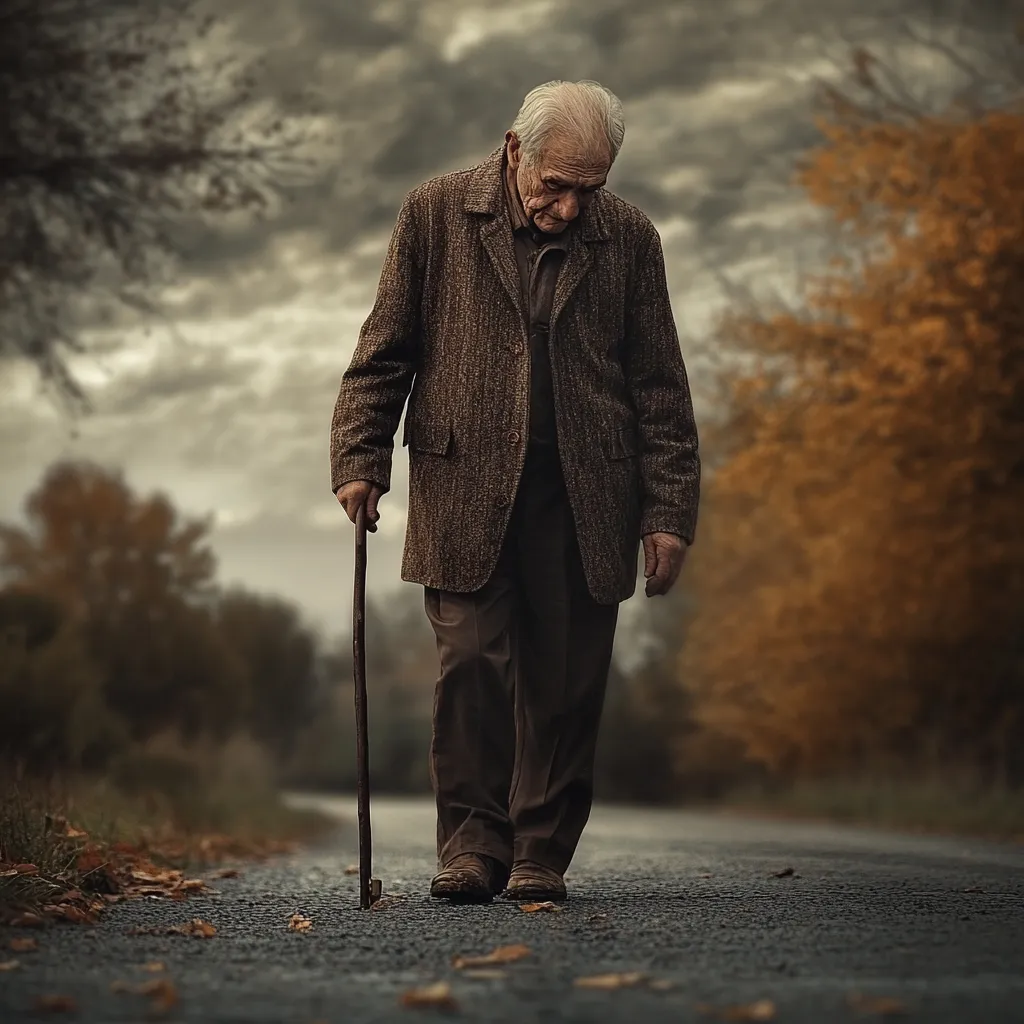
On a cold autumn morning, the kind that carried the smell of wet leaves and wood smoke, Burt bundled himself in his old wool coat and set out for church. The road was slick from rain, and the cane in his right hand tapped a slow rhythm as he walked. He wasn’t hurrying. He never did anymore. But halfway down the lane, something interrupted the stillness—a soft, broken sound that didn’t belong. He stopped and listened. A faint whimper drifted from the roadside ditch. He turned his head, eyes narrowing through the drizzle. There, half-hidden beneath a bush, was a small cardboard box, its edges darkened by rain.
Burt hesitated. His knees ached, and the ground was muddy. But that sound—thin, frightened—pulled at him until he bent down beside the box. Inside, a tiny black-and-white puppy trembled, soaked to the bone. Its fur was matted, its eyes wide and pleading. A soggy scrap of paper lay stuck to the side. He peeled it free and squinted at the shaky handwriting: Take care of him.
Something shifted inside him, something he hadn’t felt in years. Without another thought, he slipped off his scarf, wrapped the puppy gently, and tucked it beneath his coat. The warmth of the small body pressed against his chest seemed to fill a hollow place he’d long thought empty.
He took the puppy home, set it on a towel near the heater, and watched as it stopped shivering. When he looked into its trusting eyes, a name rose from a place deep within him—a name he and Martha had once chosen for the baby they’d hoped for after James: Sebastian. They never got the chance to use it. Until now.
From that day on, the quiet house began to breathe again. The sound of paws on the floor replaced the echo of loneliness. Sebastian followed him everywhere—from the kitchen to the porch to the garden that hadn’t seen care in years. The little dog seemed to sense Burt’s every mood. When Burt napped in his armchair, Sebastian curled against his slippered feet. When Burt shuffled slowly through his morning chores, Sebastian trotted beside him, tail wagging like a metronome of joy.
The first time Burt laughed again, really laughed, was when the pup proudly dragged one of his slippers into the living room, wagging his tail as if he’d discovered buried treasure. It startled him—the sound of his own laughter—but it felt good. Natural. For the first time in decades, he didn’t feel like a man simply waiting for his days to end. He felt needed again.
Their days found a rhythm. Every morning, Burt filled a small bowl with milk and bits of bread, then brewed his tea while Sebastian waited patiently by his chair. In the afternoons, they walked together down the lane to the post office or to the park bench where Burt used to sit alone. People began to notice him again—the old man with the lively little dog. Strangers stopped to chat, to smile, to reach down and scratch Sebastian’s ears. And Burt, who had once spoken only to the wind, found himself talking back.
Two years passed this way, slow and golden. The seasons came and went, but the bond between the man and his dog only grew stronger. Sebastian was no longer the frightened creature from the rain-soaked box. He had become sturdy and loyal, the kind of dog who never let Burt out of sight. Together, they weathered each day with quiet companionship.
Then, one careless moment changed everything.
It was a warm spring afternoon. Burt had been sweeping the porch, humming softly as Sebastian lay nearby. When the mail carrier arrived, Burt propped the gate open to chat. It was only a minute—less than that—but it was enough. A sudden noise from down the road, the clatter of a passing truck, sent Sebastian bolting through the open gate.
“Sebastian!” Burt shouted, but his voice cracked. His heart pounded as he limped after the dog, but age had long stolen his speed. The pup disappeared around the corner, leaving only silence behind.
That night, Burt couldn’t sleep. He sat by the window, staring into the darkness, calling softly now and then as if the wind might carry his voice to Sebastian’s ears. The next morning, he pinned handwritten notices to every post and tree he could reach. Lost dog—black and white—answers to Sebastian. Please call.
Days turned into weeks. Neighbors helped search the woods and alleys, but there was no sign. The house grew quiet again, too quiet. The bowls on the kitchen floor stayed empty. Burt still left the porch light on at night, just in case. Sometimes, he’d wake from a dream where he heard Sebastian’s bark, only to realize it was the wind in the chimney.
Then, nearly three weeks later, the phone rang.
“Mr. Rowland?” a young voice asked. “This is Officer Daniels. We think we’ve found your dog.”
Burt’s hand trembled. The officer explained that someone had reported barking from an old, unused well near the edge of the woods. The rescuers were already there, trying to reach the animal trapped below. Burt didn’t wait for details. He grabbed his coat and cane and hurried as fast as his legs allowed.
When he arrived, a small crowd had gathered. Flashlights bobbed in the dusk. Voices called out. Burt pushed through, heart hammering, and peered over the edge of the crumbling well. Deep below, two frightened eyes stared up through the gloom. A weak, familiar bark answered his call.
“Sebastian,” he whispered.
The rescue took nearly an hour. Ropes, harnesses, careful hands. When they finally pulled the muddy, trembling dog into the light, a cheer rose from the crowd. Sebastian, thinner now and covered in dirt, shook violently before wriggling free and bounding straight into Burt’s arms. The old man sank to his knees, holding the dog close, tears cutting clean lines through the grime on his face.
“I thought I lost you,” he whispered, voice breaking. “I thought I lost you.”
The crowd clapped and smiled, some even wiping their eyes. A few neighbors helped Burt to his feet and offered to drive him home, but he refused. He wanted to walk—with Sebastian trotting proudly by his side, tail wagging despite the exhaustion. It felt like walking with a piece of his heart restored.
Word of the rescue spread through town. People stopped by with treats for Sebastian and warm casseroles for Burt. The story made it into the local paper, a small headline about “the faithful dog and the man who never gave up.” But for Burt, the true story wasn’t about the rescue—it was about what had been rescued inside him.
He had thought his days of faith and hope were behind him. Losing his family had built a wall around his heart, a quiet fortress where nothing new could enter. But Sebastian had slipped through that wall the moment Burt opened that rain-soaked box. The little dog had brought light into a place that had forgotten how to shine.
Over time, Burt began to see the world differently again. The neighbors who once seemed distant now stopped to chat. Children waved when they passed his house, sometimes asking to play with Sebastian. Even the garden began to change. One spring, Burt decided to clear the weeds from Martha’s old rose bed. He planted new bushes—soft pink and white—and as he watered them, Sebastian dug little holes nearby, tail wagging, trying to help. It made Burt laugh out loud.
He often thought about how strange it was that love could return when you least expected it, disguised in fur and mischief. He’d thought he was saving a helpless creature, but in truth, Sebastian had saved him first. He’d taught him to listen again, to care, to open his heart to something fragile and fleeting.
Years went by quietly. Burt grew slower, his hair whiter, but Sebastian stayed by his side through every sunrise and every restless night. Sometimes Burt would talk to him as if he were human, telling him stories about Martha and James, about the farm he grew up on, about the way the stars looked brighter before electric lights came along. Sebastian would tilt his head, eyes soft, as if he understood every word.
On calm evenings, they’d sit on the porch together, Burt in his rocking chair and Sebastian at his feet. The sun would dip low, painting the sky in oranges and golds. Burt would reach down, stroke the soft fur, and think that perhaps this was what peace looked like—not the absence of loss, but the quiet acceptance that life still offers beauty after it breaks your heart.
One evening, as autumn returned and the air carried that same damp chill from years before, Burt looked down at Sebastian and smiled. “You know,” he murmured, “angels don’t always come with wings. Sometimes, they come on four small paws.”
The dog looked up, eyes bright, tail thumping gently against the porch boards. Burt laughed, the sound warm and easy.
The years had taken much from him—family, youth, strength—but they had given him this: a reminder that love never truly disappears. It only changes form, waiting patiently for us to notice it again. And in that small house at the edge of town, where once there had been only silence, there was now the steady rhythm of breath, the tap of paws, and the unspoken bond between an old man and the dog who had brought him back to life.
Even after he was gone, neighbors would say they still saw Sebastian sitting at the gate in the evenings, watching the road as if waiting for his friend to return. And maybe, in some gentle way, he had. Because love like that doesn’t fade—it lingers, quiet but eternal, in the spaces where two hearts once met and healed each other.
And in that little house where silence once ruled, the memory of laughter still seemed to echo softly, as if the walls themselves remembered the sound of life returning home.